
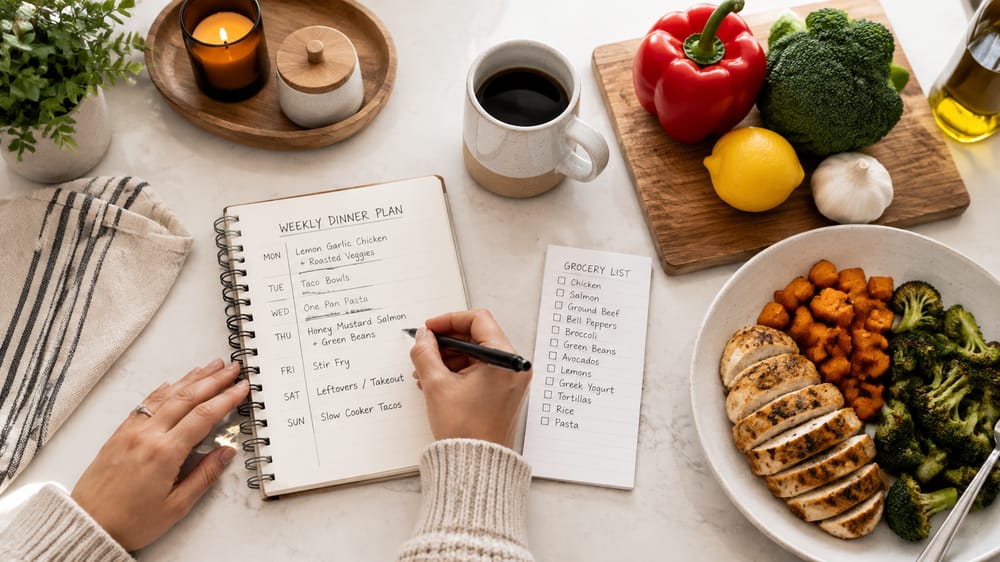
Meal planning is supposed to make life easier—not eat up your entire weekend. Here’s a simpler way to plan family dinners, shop once, prep smarter, and spend less time figuring out what’s for dinner.
Meal planning sounds simple until you realize it’s not really one decision. It’s dozens of them.
What should we eat? What ingredients do we already have? What needs to go on the grocery list? Which nights are busy? What will the kids actually eat? And, somehow, you’re supposed to answer all of that before you’ve even made it through your first cup of coffee.
That’s why “I’ll just meal plan on Sunday” can quietly turn into an hour—or three—of scrolling recipes, checking the fridge, making lists, and trying to predict what everyone will want four days from now.
The good news is that meal planning doesn’t need to take over your Sunday. The trick is to stop treating it like a weekly research project.
Why Does Meal Planning Take So Long?
Most meal-planning advice focuses on the final list of dinners. But the list isn’t usually the hard part. The hard part is everything your brain has to do to create it.
You’re searching for ideas, remembering what everyone likes, checking the calendar, trying not to repeat what you made last week, thinking about ingredients that need to be used up, and mentally calculating how much effort you’ll actually have on Wednesday night.
Then you have to turn those decisions into a grocery list—and hope you didn’t forget the one ingredient that makes Thursday’s dinner possible.
It’s a lot of tiny decisions packed into one supposedly simple task. And when you’re already managing work, kids, schedules, laundry, appointments, and everything else, those decisions add up fast.
The Simplest Way to Meal Plan for a Family
A good meal-planning system should reduce decisions, not create more of them.
Instead of starting every week with a blank page and asking, “What should we eat?”, give yourself a smaller set of choices and work from there.
The goal isn’t to create the most interesting menu your family has ever eaten. It’s to get five realistic dinners onto the calendar, get everything you need in one grocery trip, and make those meals easier to cook when life gets busy.
A simple system looks like this:
- Choose five dinners for the week.
- Make sure they fit the week you actually have—not the week you wish you had.
- Build one combined grocery list for all five meals.
- Do a small amount of prep ahead of time where it actually saves work.
- Keep the recipes and cooking instructions easy to find when it’s time to make dinner.
That’s it. You don’t need a color-coded calendar, three hours of meal prep, or 47 saved recipes open in browser tabs. You need fewer decisions between “we need food this week” and “dinner is on the table.”
5 Ways to Make Weekly Meal Planning Faster
1. Stop Searching the Entire Internet for Dinner Ideas
Unlimited choices sound helpful, but they usually make meal planning harder. Instead of starting with Pinterest, Google, Instagram, cookbooks, and every recipe you’ve ever saved, start with a limited group of meals that already fit your family.
You can always add something new when you want to. You just shouldn’t have to search the entire internet before you’re allowed to make dinner.
2. Plan for Your Hardest Nights First
Look at your calendar before choosing meals. If Tuesday is packed with activities and Thursday has you getting home late, those are not the nights for ambitious recipes.
Give the easiest meals to the hardest days. Save anything that takes more time for evenings when you’re actually likely to have it.
3. Choose Meals Before Building the Grocery List
Don’t bounce back and forth between recipes and your grocery list. Pick the dinners first, then combine everything they require into one list.
Before shopping, check your pantry, refrigerator, and freezer and cross off what you already have. This turns grocery planning into one step instead of five separate scavenger hunts.
4. Prep Ingredients, Not Five Complete Meals
Meal prep doesn’t have to mean spending Sunday filling a refrigerator with identical containers.
If chopping vegetables, mixing a sauce, cooking a grain, or portioning an ingredient now will genuinely make the week easier, do it. If it won’t save meaningful time later, skip it.
5. Keep Everything in One Place
A meal plan isn’t very helpful if the recipes are in five browser tabs, the grocery list is on your phone, and the prep notes are somewhere else entirely.
Keep the week’s dinners, shopping list, prep information, and recipes together. The less hunting you have to do, the easier the system is to actually use.
The Real Goal: Stop Starting From Scratch Every Week
The biggest improvement you can make to meal planning isn’t learning to plan faster. It’s removing the need to rebuild the whole system every Sunday.
Because even a streamlined process still leaves you choosing meals, combining ingredients, organizing the grocery list, figuring out what can be prepped ahead, and keeping track of everything when it’s time to cook.
That’s exactly why we built DinnerDonkey.
Instead of handing you another giant database of recipes to scroll through, DinnerDonkey gives you 10 dinner options and lets you choose 5. From those choices, it builds your weekly shopping list, prep guide, recipes, and cook-day instructions.
You still decide what sounds good. You just don’t have to do all the work that comes after that decision.
Dinner planning without the planning.
Pick 5 dinners. DinnerDonkey handles the shopping list, prep plan, and everything you need to get them on the table.
Meal Planning Should Give You Time Back
Meal planning works when it makes the rest of your week easier—not when planning the meals becomes another weekend project.
Start smaller. Choose a handful of realistic dinners. Shop for them together. Prep only what will actually help. And keep everything you need in one place.
You don’t need to become better at thinking about dinner.
You need to spend less time thinking about it.